
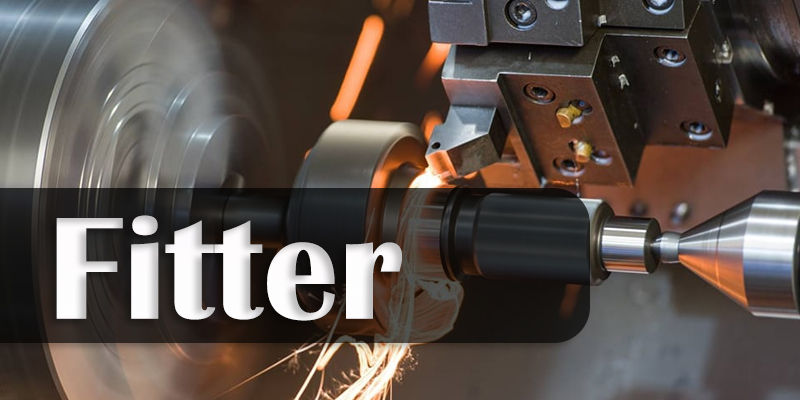
ITI Fitter is a 2-year technical vocational course (CTS) focusing on fitting, assembling, and maintaining industrial machinery and metal parts. It covers trade theory (safety, tools, machinery, engineering drawing) and practical training (filing, drilling, turning), leading to a recognized National Trade Certificate (NTC)
Key Aspects of ITI Fitter:
- Course Structure: Two-year, often split into four semesters, covering both theoretical and practical modules.
- Core Skills: Students learn to use tools like lathes, drills, grinders, and precision measuring instruments (micrometres, verniers).
- Job Roles: Upon completion, graduates can work as technicians, machine assemblers, pipe fitters, or structural fitters in manufacturing plants, public sector units (PSUs), or private industries.
- Career Scope: High demand in manufacturing, automotive, heavy engineering, and maintenance departments.
Key Subjects Covered:
- Safety Practices: Workshop safety and personal protective equipment (PPE).
- Fitting Techniques: Precision fitting, assembly, and maintenance.
- Engineering Drawing: Interpreting mechanical drawings.
- Trade Theory: Knowledge of metals, tools, and machining processes.
ITI Fitter is a 2-year technical vocational course (CTS) focusing on fitting, assembling, and maintaining industrial machinery and metal parts. It covers trade theory (safety, tools, machinery, engineering drawing) and practical training (filing, drilling, turning), leading to a recognized National Trade Certificate (NTC)
Key Aspects of ITI Fitter:
- Course Structure: Two-year, often split into four semesters, covering both theoretical and practical modules.
- Core Skills: Students learn to use tools like lathes, drills, grinders, and precision measuring instruments (micrometres, verniers).
- Job Roles: Upon completion, graduates can work as technicians, machine assemblers, pipe fitters, or structural fitters in manufacturing plants, public sector units (PSUs), or private industries.
- Career Scope: High demand in manufacturing, automotive, heavy engineering, and maintenance departments.
Key Subjects Covered:
- Safety Practices: Workshop safety and personal protective equipment (PPE).
- Fitting Techniques: Precision fitting, assembly, and maintenance.
- Engineering Drawing: Interpreting mechanical drawings.
- Trade Theory: Knowledge of metals, tools, and machining processes.