
Skip to header Skip to main navigation Skip to main content Skip to footer

User account menu

  • Log in
Home
ITI Fitter
Free Online Craftsmen Training

Main navigation

  • Home
  • Question Paper
  • Syllabus
  • ITI Tools
    • Employability Skills (opens in new tab)
    • Engineering Drawing (opens in new tab)
    • Workshop Calculation and Science (opens in new tab)
    • Hunnarbaaz (opens in new tab)
    • Syllabus (opens in new tab)

Response to emergencies e.g.; power failure, fire, and system failure

Breadcrumb

  • Home
  • Response to emergencies e.g.; power failure, fire, and system failure
ITI Fitter
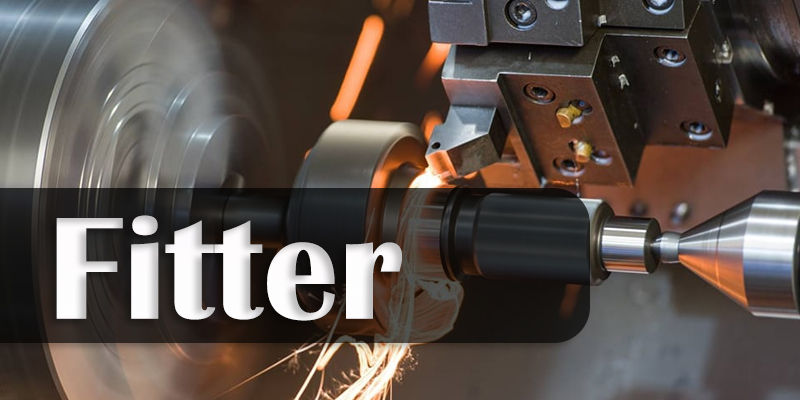
Fitter

ITI Fitter is a 2-year technical vocational course (CTS) focusing on fitting, assembling, and maintaining industrial machinery and metal parts. It covers trade theory (safety, tools, machinery, engineering drawing) and practical training (filing, drilling, turning), leading to a recognized National Trade Certificate (NTC)

Key Aspects of ITI Fitter:

  • Course Structure: Two-year, often split into four semesters, covering both theoretical and practical modules.
  • Core Skills: Students learn to use tools like lathes, drills, grinders, and precision measuring instruments (micrometres, verniers).
  • Job Roles: Upon completion, graduates can work as technicians, machine assemblers, pipe fitters, or structural fitters in manufacturing plants, public sector units (PSUs), or private industries.
  • Career Scope: High demand in manufacturing, automotive, heavy engineering, and maintenance departments.

Key Subjects Covered:

  • Safety Practices: Workshop safety and personal protective equipment (PPE).
  • Fitting Techniques: Precision fitting, assembly, and maintenance.
  • Engineering Drawing: Interpreting mechanical drawings.
  • Trade Theory: Knowledge of metals, tools, and machining processes.


By iti | 2:31 PM IST, Fri March 13, 2026

Response to Emergencies such as Power Failure, Fire, and System Failure

In industrial environments, workshops, and training institutes, unexpected emergencies may occur at any time. These emergencies may include power failures, fire incidents, system failures, or other unexpected events that can disrupt normal operations. Proper knowledge of how to respond to such emergencies is essential for maintaining safety, protecting equipment, and ensuring the well-being of workers and trainees.

In workplaces such as Industrial Training Institutes (ITIs), factories, and computer laboratories, workers and students must be trained to respond quickly and effectively during emergency situations. A well-organized emergency response system helps minimize damage, reduce risks, and ensure the safety of everyone present in the workplace.

Understanding Workplace Emergencies

An emergency is an unexpected situation that requires immediate action to prevent injury, damage, or loss. Industrial environments often involve machinery, electrical systems, and computers that may fail or cause hazardous situations if not handled properly.

Common workplace emergencies include:

  • Power failure or electrical outage
  • Fire accidents
  • Computer or system failures
  • Equipment malfunction
  • Natural disasters

Workers must remain calm and follow proper procedures to handle these situations effectively.

Response to Power Failure

Power failure is a common emergency that may occur in industries, offices, and computer labs. A sudden loss of electricity can stop machines, interrupt computer operations, and create unsafe conditions.

Causes of Power Failure

  • Electrical faults
  • Overloaded circuits
  • Equipment malfunction
  • External power supply interruptions

Steps to Respond to Power Failure

When a power failure occurs, the following steps should be taken:

  • Remain calm and avoid panic.
  • Switch off machines and electrical equipment.
  • Disconnect sensitive devices to prevent damage when power returns.
  • Use emergency lighting if available.
  • Report the power outage to the responsible authority or technician.

In computer laboratories, it is important to save work regularly so that data is not lost during power failures.

Preventive Measures

  • Use backup power systems such as UPS (Uninterruptible Power Supply).
  • Install circuit breakers and safety devices.
  • Maintain electrical equipment regularly.

Response to Fire Emergencies

Fire is one of the most dangerous emergencies in industrial environments. It can cause serious injuries, loss of life, and damage to property if not controlled quickly.

Fire hazards may arise from electrical faults, flammable materials, chemical reactions, or overheating machines.

Common Causes of Fire

  • Electrical short circuits
  • Overheated machinery
  • Improper storage of flammable materials
  • Careless handling of combustible substances

Steps to Respond to Fire

When a fire emergency occurs, quick and careful action is necessary to prevent the fire from spreading.

  • Raise the alarm immediately.
  • Inform supervisors or emergency personnel.
  • Switch off electrical power if safe to do so.
  • Use fire extinguishers to control small fires.
  • Evacuate the area if the fire becomes uncontrollable.

Workers should follow designated evacuation routes and assemble at safe locations outside the building.

Types of Fire Extinguishers

Different types of fire extinguishers are used depending on the type of fire.

  • Water extinguishers – for ordinary combustible materials
  • Foam extinguishers – for liquid fires
  • CO₂ extinguishers – for electrical fires
  • Dry chemical extinguishers – for multiple fire types

Workers should be trained in the correct use of fire extinguishers to ensure effective fire control.

Response to System Failure

System failures often occur in computer labs, offices, or industries that depend on computer systems for operations. System failure may involve hardware problems, software errors, or network issues.

Common Causes of System Failure

  • Hardware malfunction
  • Software errors or bugs
  • Virus or malware attacks
  • Overheating of computer systems
  • Network connectivity problems

Steps to Handle System Failure

When a system failure occurs, the following actions should be taken:

  • Remain calm and do not attempt random troubleshooting.
  • Save any possible data before restarting the system.
  • Restart the computer or system if safe to do so.
  • Check power connections and network cables.
  • Report the issue to the technical support team.

Regular data backups are important to prevent loss of important information during system failures.

Emergency Preparedness

Being prepared for emergencies is essential for maintaining workplace safety. Organizations should develop emergency response plans and train workers regularly.

Emergency preparedness includes:

  • Regular safety training programs
  • Emergency drills and simulations
  • Proper maintenance of equipment
  • Availability of safety equipment

These measures help ensure that workers know how to respond quickly during emergencies.

Importance of Emergency Awareness

Emergency awareness helps workers remain calm and take appropriate actions during unexpected situations. Proper training reduces panic and ensures that emergency procedures are followed correctly.

Workers who understand emergency response procedures can protect themselves, their colleagues, and workplace equipment from serious damage.

Role of Safety Training in ITIs

Industrial Training Institutes provide safety education to prepare students for real industrial environments. Students learn how to handle emergency situations such as power failures, fire hazards, and system malfunctions.

Practical demonstrations and safety drills help students develop confidence and readiness to respond effectively during emergencies.

Conclusion

Emergencies such as power failures, fire incidents, and system failures can occur unexpectedly in workplaces. Proper knowledge of emergency response procedures is essential for ensuring safety and minimizing damage.

By following appropriate steps such as switching off equipment during power failures, using fire extinguishers during fire incidents, and reporting system failures to technical staff, workers can manage emergency situations effectively.

Training and awareness are key factors in emergency management. With proper preparation and responsible behavior, workplaces can maintain safety and ensure smooth operations even during unexpected events.

Book Page

Foundation Bolts
Purpose of Lubrication
Methods of Lubrication
Importance of Technical English Terms Used in Industry
Hydraulic Cylinders
Symbols of Hydraulic Components
Pneumatic Valves
Compressed Air Generation and Conditioning
Fluid Power
Method of Fixing Geared Wheels
Helical Gear
Power Transmission by Gears
V-Belts
Power Transmission Elements
Aluminium and Its Alloys
Constructional Features of Drilling Jigs
Standard Pipe Fittings
Pipe Working Tools
Pipes and Pipe Fittings
Importance of Keeping Work Free from Rust and Corrosion
Bearing Metals
Roller and Needle Bearings
Functions of Bearings
Importance of Gauges
Protective Coatings for Metals
Tapers on Keys and Cotters
Purpose of Annealing
Metallurgical and Metal Working Processes
Applications of Honing
Applications of Lapping
Application of Slip Gauges for Measuring
Slip Gauges
Templates and Radius/fillet gauge, feeler gauge, hole gauge, and their uses, care and maintenance
Types of Special Files
Locking Devices
Material of Screws
Assembling Techniques
Total Productive Maintenance (TPM)
Screw Thread
General Turning Operations
Chucks and Chucking
Lathe Cutting Tools
Safety Precautions While Working on a Lathe
Dial Test Indicator
Vernier Micrometer
Simple Scraper
Pig Iron
Method of Expressing Tolerance as per BIS
Necessity of Interchangeability in Engineering
Necessity of Gauges
Grinding Wheel
Drill Troubles: Causes and Remedies
Tap Wrench
Countersink, Counterbore and Spot Facing
Material of Drills
Oxygen-Acetylene Cutting Machine
Setting up Parameters for Arc Welding Machines
Welding Hand Tools
Safety in Welding Shop
Rivets and Riveting
Solder and Soldering
Stakes in Sheet Metal Work
Marking and Measuring Tools in Sheet Metal Work
Safety Precautions in a Sheet Metal Workshop
Drilling Process
Vernier Calipers
Micrometer – Outside and Inside Micrometer
Power Saw, Band Saw and Circular Saw Machines Used for Metal Cutting
Physical and Mechanical Properties of Engineering Metals
Marking Media and Their Applications
Bench Vice: Construction, Types, Uses, Care and Maintenance
Linear measurements - its units, dividers, calipers, hermaphrodite, centre punch, dot punch, prick punch their description and uses of different types of hammers. Description, use and care of ‘V’ Blocks, marking off table.
Basic understanding on Hot work, confined space work and material handling equipment
Health, Safety and Environment guidelines, legislations &regulations as applicable
Introduction to 5S concept & its application
Response to emergencies e.g.; power failure, fire, and system failure
Introduction of First aid. Operation of electrical mains and electrical safety. Introduction of PPEs
Importance of safety and general precautions observed in the in the industry/shop floor
Soft Skills, its importance and Job area after completion of training
All Necessary Guidance to be Provided to the Newcomers to Become Familiar with the Working of Industrial Training Institute System Including Stores Procedures

Question Paper

Trade Practical Semester 1 July 2018
Trade Theory Semester
Fitter 1st Semester
Semester 2 Module 1 - Drilling
FITTER – Semester 3 Module- 1 - Assembly
FITTER – Semester 4 Module 1 - Drill jig
Trade Theory Semester
Trade Theory Semester 4 January 2018
Trade Theory Semester 3 July 2018
Trade Theory Semester 3 July 2017
Trade Theory Semester 3 January 2018
Trade Theory Semester 2 July 2018
Trade Theory Semester
Trade Practical Semester 4 July 2018
Trade Practical Semester 4 July 2017
Trade Practical Semester 4 January 2018
Trade Practical Semester 3 July 2018
Trade Practical Semester 3 July 2017
Trade Practical Semester 2 July 2017

Common Subject

  • Engineering Drawing
  • Employability Skills
  • Workshop Calculation Science

Directory

  • Industrial Training Institutes
  • Engineering College
  • Medical College

Knowledge Bank

  • ITI Syllabus
  • Tools

Student Friend

  • ITI Admission
  • ITI Jobs
  • ITI Hunnarbaaz
  • Get ITI Website

Electrician + Wireman + Electroplater + Electrician Power Distribution + Lift and Escalator Mechanic | ITI Fitter | ITI COPA | ITI Welder | ITI Mechanic | ITI Electronics | Agriculture + Horticulture + Floriculture | ITI Draughtsman Civil & Mech | ITI Refrigeration & Air Conditioning | ITI Turner | ITI Plumber | ITI Machinist | ITI Cosmetology | ITI Sewing | ITI Surveyor

Syllabus

Workshop Calculation and Science
Employability Skills
Fitter Engineering Drawing
Employability Skills
Fitter Engineering Drawing
Workshop Calculation and Science

Copyright © 2026 ITI Directory - All rights reserved

Developed and Designed by ITI Directory