
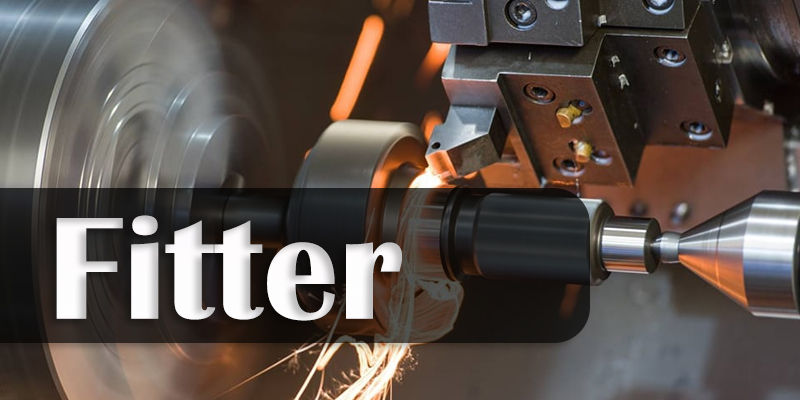
Safety Precautions While Working on a Lathe
A lathe machine is one of the most commonly used machines in engineering workshops. Since the workpiece rotates at high speed, proper safety precautions must be followed to prevent accidents and injuries.
General Safety Precautions
- Wear proper protective clothing and safety shoes.
- Avoid loose clothing and jewelry while operating the lathe.
- Ensure the workpiece is properly fixed before starting the machine.
- Do not touch rotating parts of the machine.
- Keep tools and measuring instruments away from rotating parts.
- Use proper cutting tools and maintain correct tool position.
- Switch off the machine before making adjustments.
- Remove chips using a brush, not with bare hands.
- Keep the work area clean and free from obstacles.
Lathe Specifications
The specifications of a lathe machine indicate its capacity and working limits. Important specifications include:
- Distance between centres
- Swing over bed
- Swing over carriage
- Length of bed
- Spindle speed range
- Type of feed mechanism
Constructional Features of a Lathe
A lathe machine consists of several parts that work together to perform machining operations. The main constructional features include the bed, headstock, carriage, tailstock, and feed mechanisms.
Main Parts of a Lathe
Bed
The bed is the main base of the lathe machine. It is made of strong cast iron and provides support for other parts of the machine. The bed contains guideways along which the carriage and tailstock move.
Headstock
The headstock is mounted on the left side of the bed. It contains the main spindle, gears, and speed control mechanism. The headstock holds and rotates the workpiece during machining operations.
Carriage
The carriage moves along the bed and carries the cutting tool. It allows the tool to move longitudinally and crosswise to perform different machining operations.
Main Parts of Carriage
- Saddle
- Cross slide
- Compound rest
- Tool post
- Apron
Tailstock
The tailstock is mounted on the right side of the lathe bed. It supports the free end of the workpiece when machining long shafts and can also hold tools such as drills and reamers.
Feeding Mechanism
The feed mechanism controls the movement of the carriage and cutting tool automatically during machining operations.
Thread Cutting Mechanism
The thread cutting mechanism uses lead screws and gear arrangements to produce threads on cylindrical workpieces.
Holding of Job Between Centres
When long cylindrical workpieces are machined, they are supported between two centres: one in the headstock and one in the tailstock.
Works with Catch Plate and Dog
A lathe dog is clamped to the workpiece and connected to a catch plate attached to the spindle. When the spindle rotates, the catch plate drives the lathe dog, which rotates the workpiece.
Components Used
- Lathe centres
- Lathe dog
- Catch plate
Lathe Cutting Tools
Facing Tool
A facing tool is used to produce a flat surface at the end of a cylindrical workpiece. The tool moves perpendicular to the axis of rotation.
Applications
- Producing flat surfaces on workpieces.
- Preparing the workpiece for further machining.
Roughing Tool
A roughing tool is used to remove large amounts of material quickly during the initial machining stage.
Applications
- Removing excess material from workpieces.
- Preparing the workpiece for finishing operations.
Conclusion
The lathe machine is an important tool used in mechanical workshops for machining cylindrical components. Understanding its safety precautions, constructional features, and main parts helps ensure efficient and safe operation. Proper use of holding devices and cutting tools improves machining accuracy and productivity.