
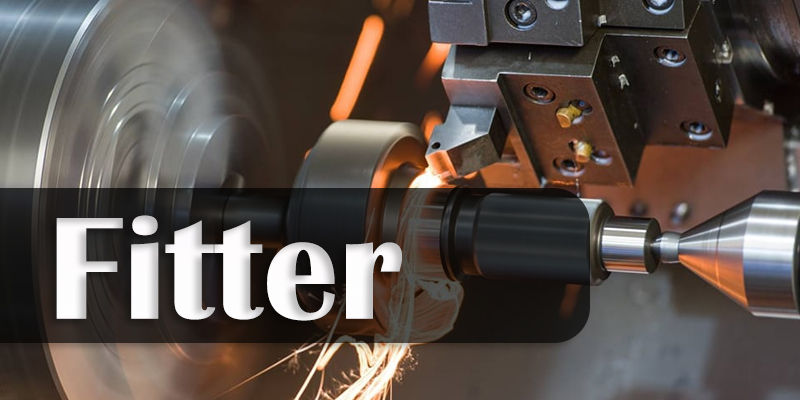
FITTER Training System
The Fitter trade under the Craftsmen Training Scheme (CTS) is designed to provide systematic vocational training for individuals who want to build a career in mechanical and manufacturing industries. The training system is implemented by the Directorate General of Training (DGT) under the Ministry of Skill Development and Entrepreneurship, Government of India. The objective of the training system is to develop skilled technicians capable of performing fitting, assembly, maintenance, and repair operations in industrial environments. :contentReference[oaicite:1]{index=1}
The Fitter training system combines theoretical knowledge with practical training to ensure that trainees develop both technical skills and professional competencies. The training is delivered through a nationwide network of Industrial Training Institutes (ITIs), which provide state-of-the-art workshops, laboratories, and classrooms for vocational education.
Vocational Training Framework
The Directorate General of Training offers various vocational training programs to meet the skill requirements of different sectors of the economy. Two major training schemes implemented by DGT are the Craftsmen Training Scheme (CTS) and the Apprenticeship Training Scheme (ATS).
The Fitter trade is one of the most popular engineering courses under CTS and is widely offered in Industrial Training Institutes across India. The course duration is two years and the curriculum is designed to provide both practical skills and theoretical knowledge required for industrial work.
Structure of the Training System
The training system for the Fitter trade is divided into two major learning areas known as the Domain Area and the Core Area. Each area focuses on specific aspects of skill development.
Domain Area
The domain area includes trade-specific subjects that help trainees develop professional skills and knowledge related to the Fitter trade. This area includes two major components:
- Professional Skill (Trade Practical)
- Professional Knowledge (Trade Theory)
Professional skill training focuses on practical workshop activities such as fitting operations, machining processes, assembly work, and maintenance of mechanical components. Students gain hands-on experience using various tools, machines, and measuring instruments used in engineering workshops.
Professional knowledge training provides theoretical understanding of engineering concepts related to fitting operations. Topics such as engineering materials, tolerances, heat treatment processes, machine elements, and lubrication systems are included in this part of the training.
Core Area
The core area includes Employability Skills which are essential for professional success in any workplace. These skills help trainees develop communication abilities, teamwork, problem-solving skills, and workplace discipline.
Employability skills also include digital literacy, entrepreneurship awareness, and basic financial knowledge. These competencies prepare trainees for modern work environments and improve their employability.
Duration of Training
The Fitter course has a total duration of two years. Each year consists of approximately 1200 hours of institutional training. This training includes both practical workshop activities and theoretical classroom instruction.
The distribution of training hours across different course elements is carefully designed to ensure balanced skill development.
Course Structure
The training hours for the Fitter course are distributed across various components as follows:
- Professional Skill (Trade Practical): 840 hours in the first year and 840 hours in the second year.
- Professional Knowledge (Trade Theory): 240 hours in the first year and 300 hours in the second year.
- Employability Skills: 120 hours in the first year and 60 hours in the second year.
This structured distribution ensures that trainees receive adequate hands-on training along with theoretical understanding of engineering concepts.
On-the-Job Training (OJT)
An important component of the training system is On-the-Job Training (OJT). Every year, trainees must complete approximately 150 hours of industrial training in nearby industries.
If industrial training facilities are not available, training institutes conduct group projects that simulate real industrial tasks. On-the-job training allows trainees to gain exposure to real working environments and understand industrial practices.
Through industrial training, trainees learn about workplace safety, machine operation, production processes, and maintenance procedures used in manufacturing industries.
Assessment and Certification
The performance of trainees is evaluated through both internal and external assessment methods. The objective of assessment is to measure the trainee’s knowledge, skills, and professional attitude.
Formative Assessment
Formative assessment is conducted continuously during the training period by instructors. This assessment includes evaluation of practical work, assignments, projects, and laboratory performance.
Training institutes maintain an individual portfolio for each trainee that includes records of attendance, assignments, practical activities, and progress charts. These records help instructors monitor the development of trainees during the course.
Summative Assessment
At the end of the training program, trainees appear for the All India Trade Test (AITT). This examination is conducted by the Controller of Examinations under the Directorate General of Training.
The final examination evaluates both theoretical knowledge and practical skills acquired during the training period. The question papers are prepared based on the learning outcomes and assessment criteria defined in the curriculum.
Candidates who successfully pass the examination are awarded the National Trade Certificate (NTC). This certificate is recognized across industries and confirms that the trainee has achieved the required competency level in the Fitter trade. :contentReference[oaicite:2]{index=2}
Career Progression Pathways
After completing the training program, trainees can join industries as technicians and gradually progress to higher positions such as senior technician, supervisor, or manager.
They may also start their own businesses as entrepreneurs in mechanical repair and maintenance services. Additionally, trainees can pursue further education by enrolling in diploma courses in engineering through lateral entry.
Graduates may also join apprenticeship training programs that lead to the National Apprenticeship Certificate (NAC). Those interested in teaching can enroll in the Craft Instructor Training Scheme (CITS) to become instructors in Industrial Training Institutes.
Conclusion
The training system for the Fitter trade is designed to provide comprehensive skill development through a balanced combination of practical training, theoretical learning, and industrial exposure. This structured approach ensures that trainees acquire the knowledge and technical skills required for successful careers in mechanical and manufacturing industries.
By following competency-based training methods and industry-oriented curriculum, the Fitter training system prepares individuals to become skilled technicians capable of contributing to the growth of the engineering and manufacturing sectors.